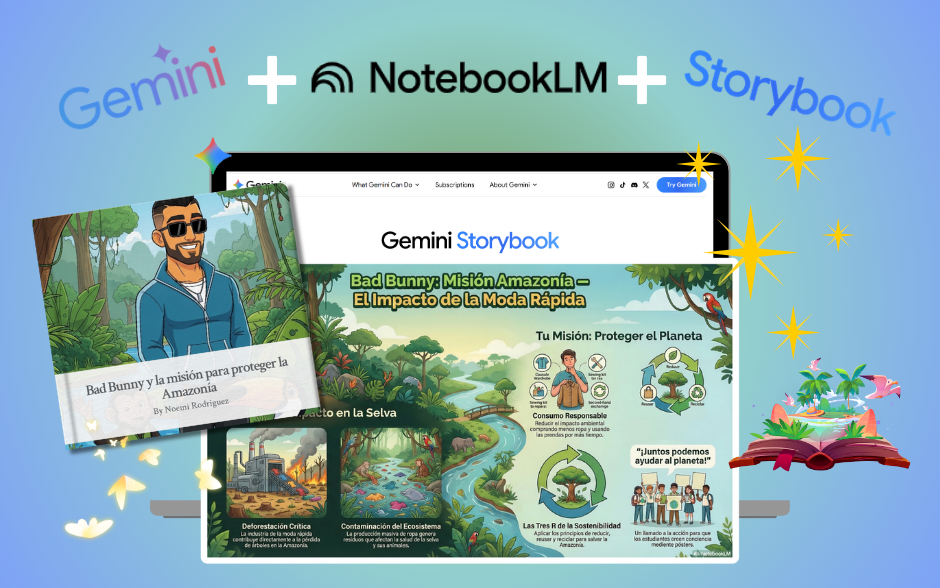
With my unit of study for Spanish I, Exploring our World, I wanted to create a story about Bad Bunny, a global fashion icon, and his mission to help protect the Amazon rainforest. This would help weave in several unique elements that I highlighted throughout my eight weeks on this unit. My goal was to bring attention to the environmental damage caused by fast fashion, particularly deforestation and pollution that impact the Amazon. This exact story did not exist, but I knew that by combining a few different AI tools I could quickly create a meaningful and engaging resource for my novice students.
I began by asking Gemini to generate a short story, page by page, about Bad Bunny’s mission to protect the Amazon rainforest. In the story, he travels through the rainforest and meets several animal friends who offer advice and help him think about ways people can better protect the planet. I also shared details about my students’ proficiency level, the key vocabulary I wanted to recycle and repeat, and my ultimate goal for the lesson: encouraging students to create their own posters to raise awareness about the impact of fast fashion within our high school community. Within moments, Gemini produced a draft of the story that aligned with my goals for novice-level learners. The story was quickly created and you can access it here.
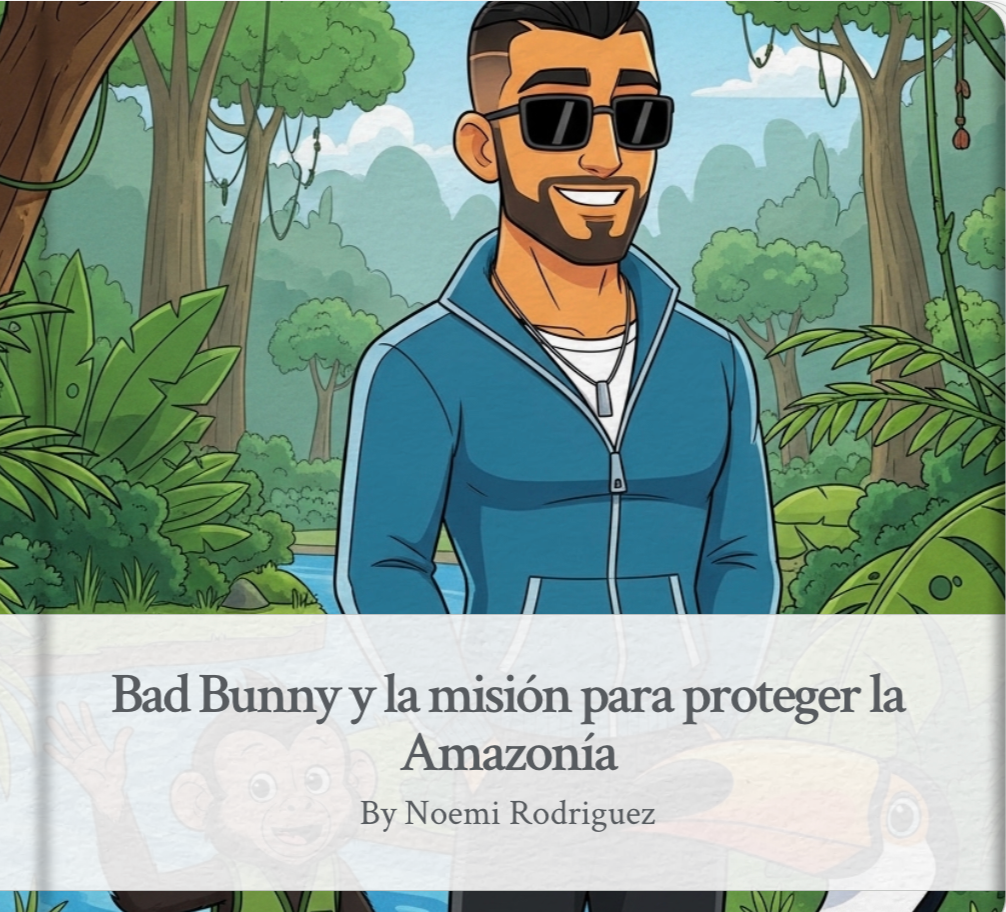
Then, I went to the Storybook Gem and NotebookLM. I copy & pasted the same story into each. NotebookLM quickly analyzed the story and provided me with a comprehensive slideshow while the Storybook Gem created an animated storybook of Bad Bunny on his quest. Both immediately served as great resources for this story by providing the images I needed to bring the story to life. The Storybook Gem will also read the story out loud and flip the pages!
Next, I experimented with both the Storybook Gem and NotebookLM. I copied the same story and pasted it into each tool to see how they would transform the content. NotebookLM quickly analyzed the story and generated a comprehensive slideshow that summarized and visualized the key ideas. At the same time, the Storybook Gem transformed the text into an animated storybook that brings Bad Bunny’s journey to life. The storybook not only includes images for each page but also reads the story aloud while turning the pages, which makes it an especially engaging option for students.
Within NotebookLM, I was also able to generate additional supportive teaching materials, including an infographic (see below) connected to the story and its themes and this video overview. These resources will help students better understand the environmental impact of fast fashion while also reinforcing the vocabulary and ideas introduced in the Bad Bunny story. It’s a win-win!
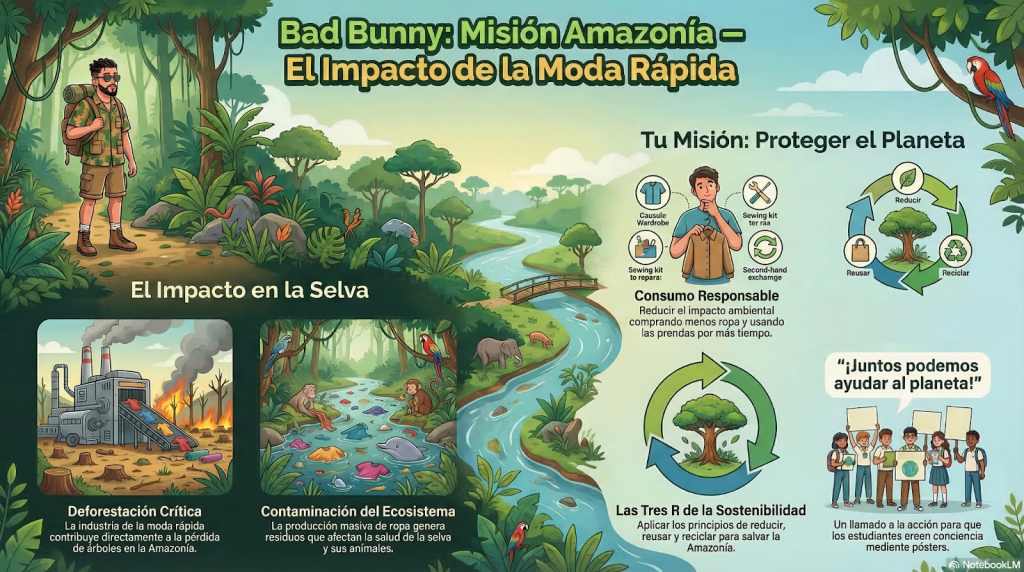
By combining these Google AI tools, I was able to design an engaging lesson that introduces students to an environmental issue, connects to a cultural figure they recognize, and ultimately invites them to take action by creating posters that advocate for protecting the Amazon rainforest. What surprised me most was how quickly everything came together. The entire process—from prompting the story to generating visuals and supporting materials—took less than ten minutes.
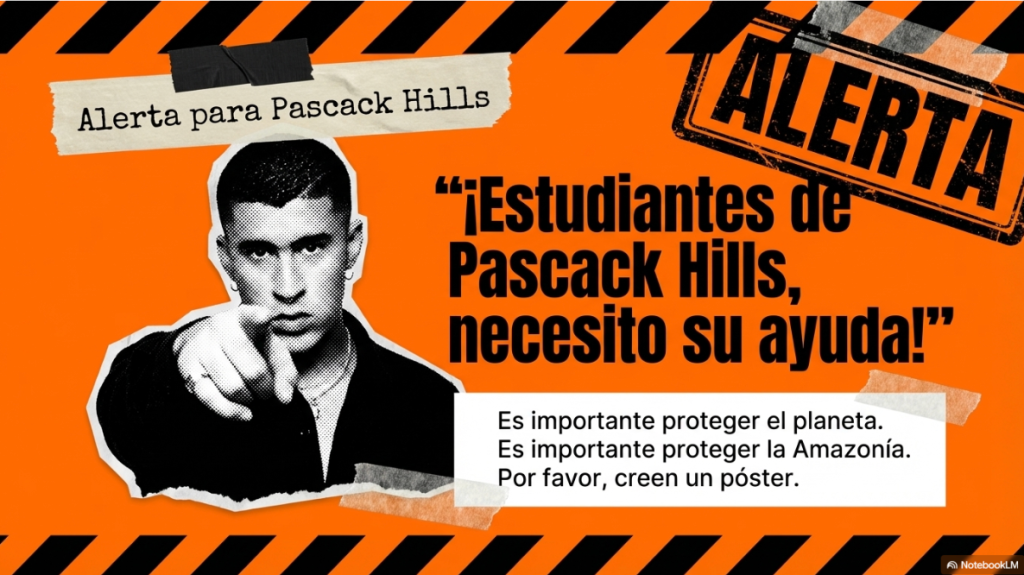
One limitation I noticed is that the files created by these tools cannot yet be edited directly within the generated slideshow or PDF. The flexibility simply is not there yet. However, Canva recently introduced a feature called Magic Layers, which makes it possible to upload these files and edit nearly every element within them. In other words, once the resources are brought into Canva, everything becomes customizable. *You can watch a quick video overview on my Youtube channel.
This quick experiment reminded me that when educators combine curiosity with the right tools, it becomes much easier to design meaningful, engaging learning experiences for students in very little time. If you are interested in learning how to explore tools like Gemini, NotebookLM, and other AI resources in practical ways for language teaching, I invite you to join our AI Learning Academy, where we experiment with new ideas, create classroom-ready materials together, and continue building our AI literacy as language educators.